Byōbu
Folding screen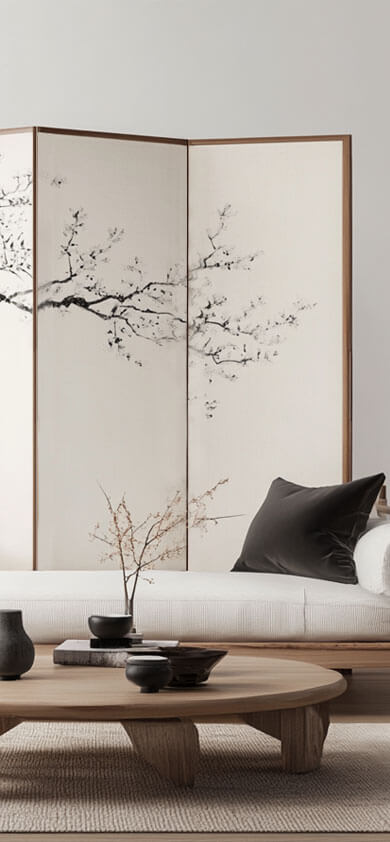
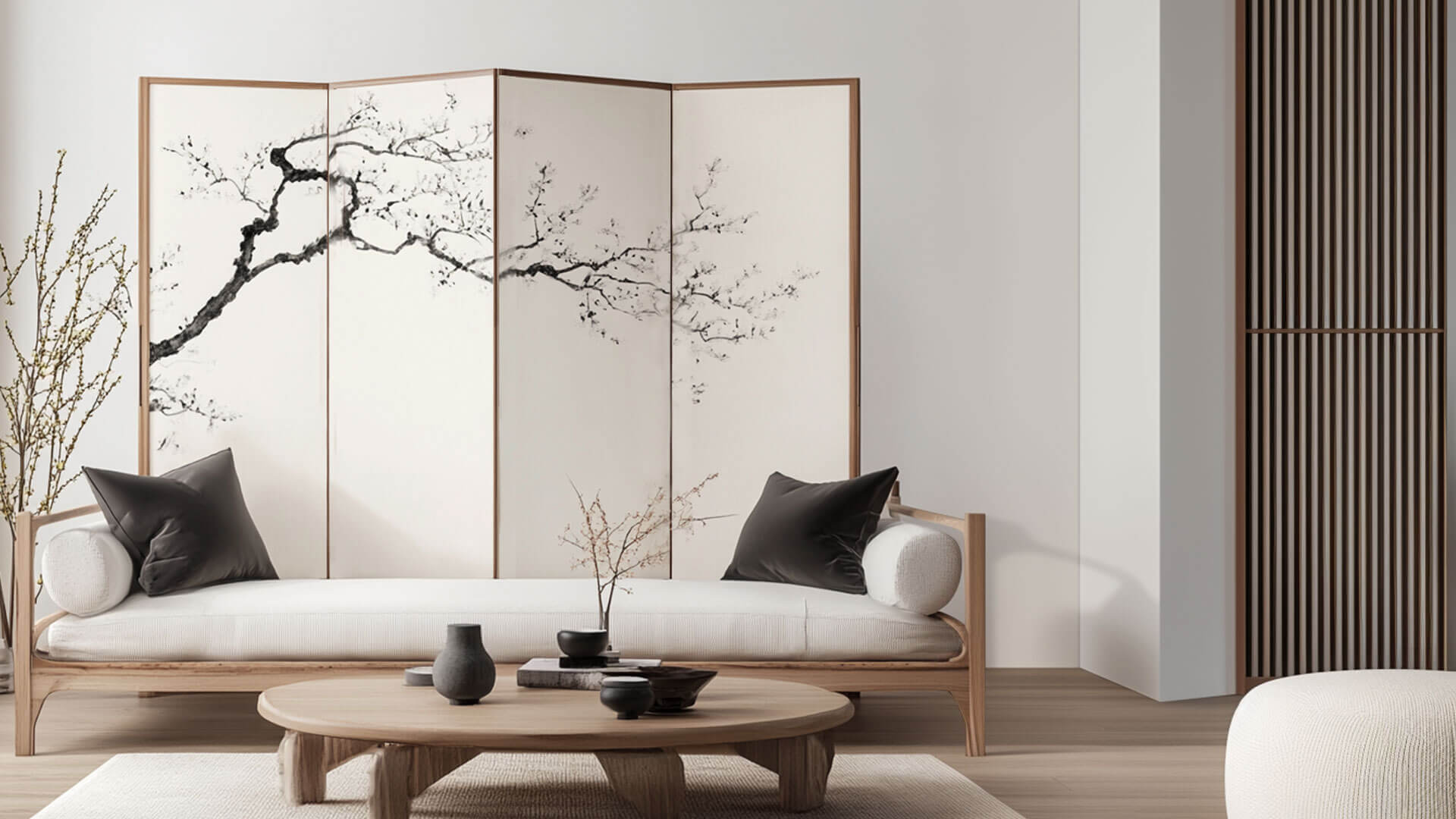
Names of Byōbu parts
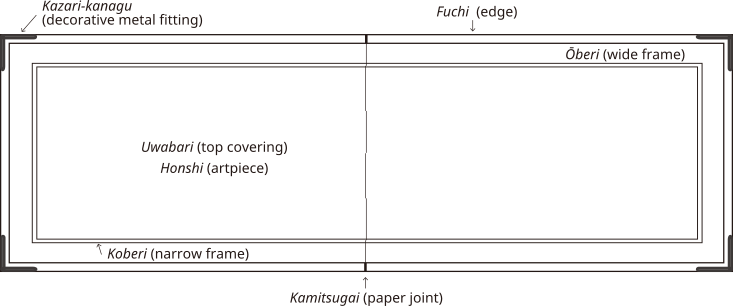
In modern times, golden byōbu pieces with six or eight folds are often placed as the background in the banquet halls in hotels or seating arrangements for celebratory occasions. They serve to highlight figures in the foreground and enhance the overall impression of space and time with greater splendor. Byōbu screens used as partitions are also featured in interior design magazines from Europe and the US.
Byōbu for dynamic expression of two-dimensional paintings
While the honshi (artpiece) of painting or calligraphy is flat on kakejiku (hanging scroll) or gakusō (framed work), it can be more dynamically and lively expressed when applied for example to a tall byōbu screen. Today, not only in Japan but also internationally, numerous artists actively embrace Japanese traditional byōbu as a medium to expand their expressive range.

Artwork by Kohei Nagasawa

Traditional Techniques or Methods
- For byōbu, gaku, fusuma, and tsuitate, the following techniques or methods shall be used:
- The base pasting shall be performed using the methods of "honeshibari (bone binding)," "betabari (full-coverage pasting)," "minobari (shifted layer pasting)," "mino’osae (shifted layer covering," "mawarisuki," and "fukurobari (bag-style pasting)."
- The byōbu hinges shall be attached using the "wing attachment" method
- The finishing pasting shall be performed using the "uwabari (top covering)" method.
(Source: The notification of designation as Traditional Crafts by the Ministry of Economy, Trade and Industry)
