Tsuitate
Screen
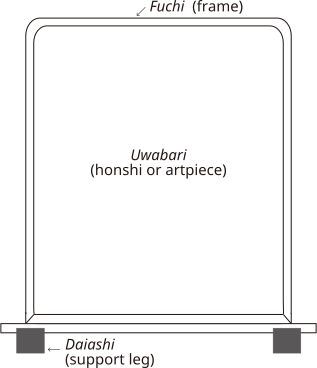
Structure of the Tsuitate Screen
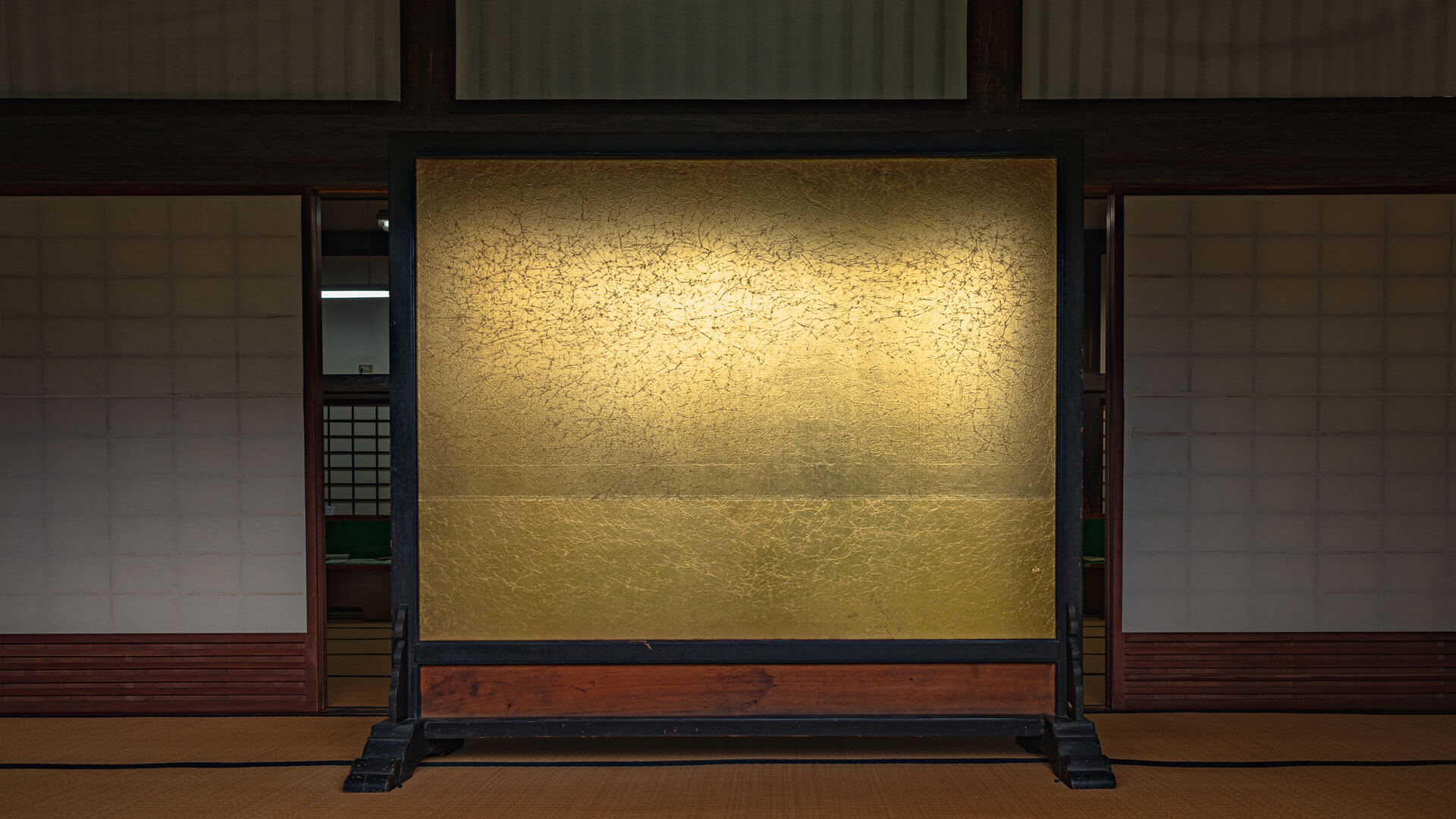
Tsuitate consists of a board-like main body and legs for self-support. The main body of an Edo-hyōgu tsuitate is made by layering multiple sheets of Japanese paper over a frame structure made of thin square timbers similar to the fusuma sliding door and the byōbu folding screen.
The surface covering may feature any preferred paper or woven textile besides traditional artwork options such as calligraphy, paintings, or decorated karakami paper. The main body need not necessarily be rectangular; combined with variations in the material and presence/absence of the frame (fuchi), an infinite range of designs is possible.
The eye-catching design made possible by hyōgu techniques draws attention of the people, distracting them from seeing what lies beyond it.
Furthermore, the hyōgu tsuitate has a unique feature compared to heavier wooden products: It is relatively lightweight and easy to move.
A unique item that maintains the open, airy feel of Japanese architecture while effortlessly and freely dividing the inside from the outside, or a private space in shared one. Its potential for use in expansive spaces like LDK areas and double-height rooms deserves a fresh look.
Use functional and beautiful tsuitate at home
Though rarely seen in modern homes, tsuitate screens can be used as casual partitions in living rooms or bedrooms, or as beautiful accents in your space.
Flat yet freestanding, these screens are lightweight and easy to move with minimal footprint. By choosing the color or pattern of the paper or textile covering the top surface, you can create designs that perfectly fit modern spaces.

Traditional Techniques or Methods
- For byōbu, gaku, fusuma, and tsuitate, the following techniques or methods shall be used:
- The base pasting shall be performed using the methods of "honeshibari (bone binding)," "betabari (full-coverage pasting)," "minobari (shifted layer pasting)," "mino’osae (shifted layer covering," "mawarisuki," and "fukurobari (bag-style pasting)."
- The byōbu hinges shall be attached using the "wing attachment" method
- The finishing pasting shall be performed using the "uwabari (top covering)" method.
(Source: The notification of designation as Traditional Crafts by the Ministry of Economy, Trade and Industry)
