Gaku
Framed Work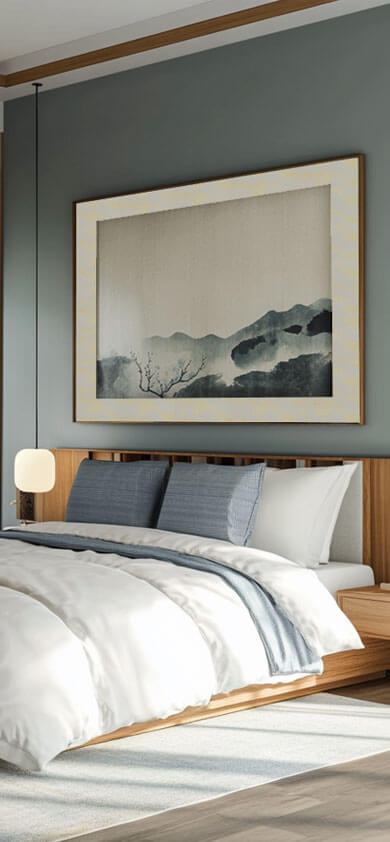
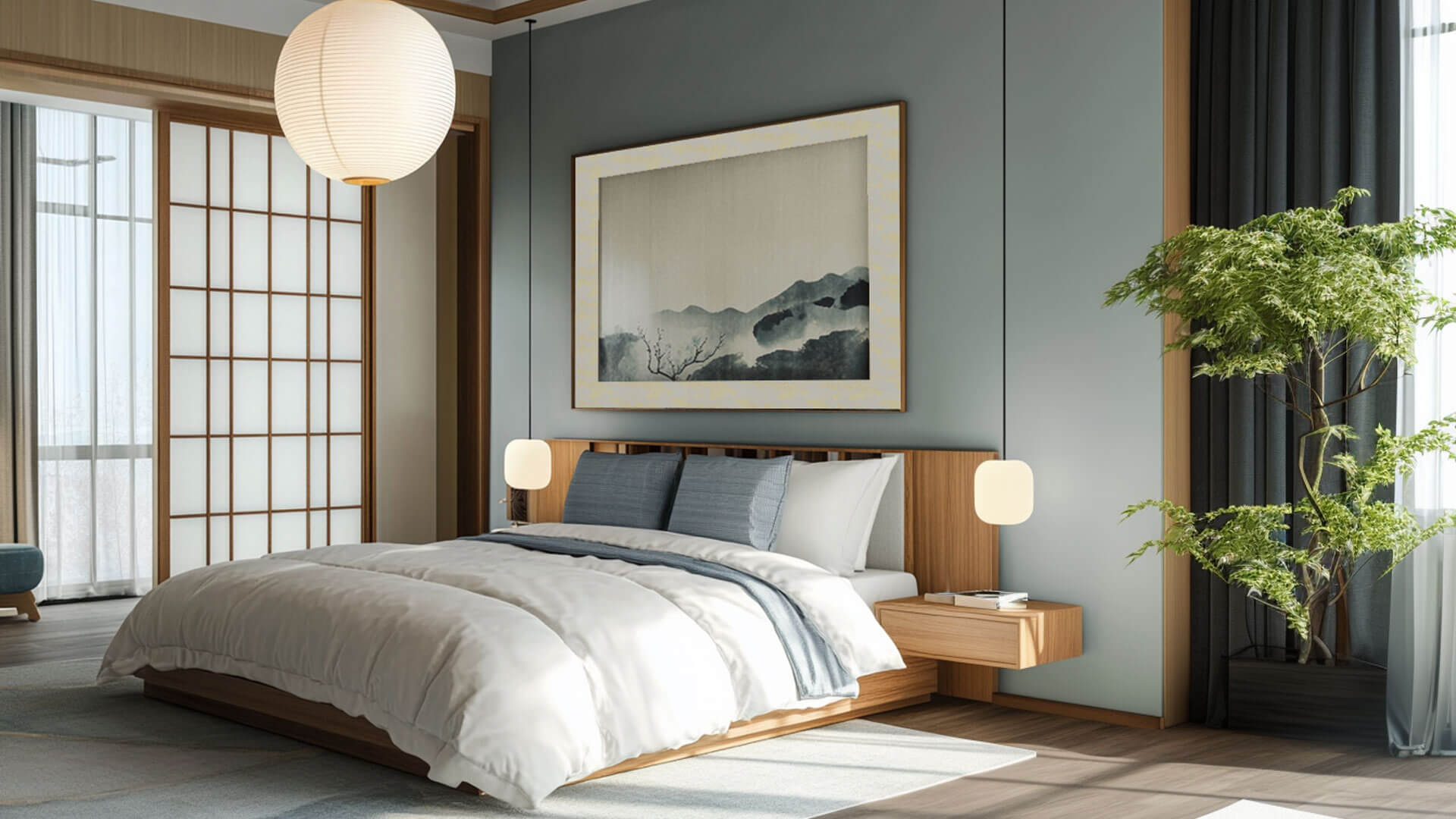
Early frames were used as “tengaku (seal-script plaques)” displayed outdoors at shrines and temples to serve as nameplates. These were made entirely of wood, including both the frame and the calligraphic inscription. Later, they developed and spread as “hengaku (horizontal plaques),” the long, horizontal plaques displayed on shrine torii gates, shrine buildings, and temple main halls.
Later, during the Edo period (1603-1868), hyōsō mounting techniques advanced, and calligraphy and paintings became accessible to the common people. The wagaku frame became popular as an interior decoration item. The kakejiku hanging scroll for the tokonoma alcove and wagaku frames for small walls became indispensable in traditional Japanese rooms.
During and after the Meiji period (1868-1912), the house style became westernized, the gaku frames became all the more popular because they can be displayed in a room even without a tokonoma alcove. Thus, the gaku frames keep on developing, as the representative category of modern artistic Japanese hyōsō techniques.
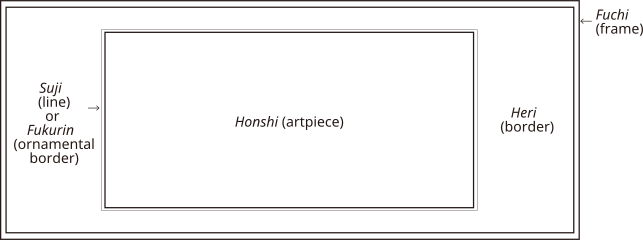
The composition of wagaku consists of the “honshi (artpiece),” the “decorative border surrounding the honshi,” and the “gakubuchi (frame).” The frame style is also an important element.
Wagaku Styles
“Betabari (full coverage backing) or hirabari (flat backing)” refers to attaching the honshi artpiece directly onto the top covering of a base layer similar to the latticework found in the fusuma sliding door. This is the standard framing style, resulting in a completely flat, non-textured finish. Frames crafted up until around the mid-Showa period (1926-1989) mostly used this structure. The style where the artpiece is mounted on a separate board from the backing, making it appear to float, is called “ukidashi (floating up).” Conversely, the style where the artpiece is recessed one level deeper is called “otoshi (recessed)” or “shizumi.”
Decorative Border around Honshi
The decorative border around the artpiece is also called “matto (mat).” To enhance the appeal of the artpiece, the border is decorated with materials and techniques including gold or silver leaf flat gilding, gold or silver dusts, and thickly woven shiny silk textile called “donsugire”.
Gold and silver leaf flat gilding
Paper gilded with gold or silver leaves achieves a luxurious finish. In addition to the flat gilding, options include silk-textured or crumpled finishes. The impression can be varied significantly depending on the type of leaf and processing applied.
Kinsunago (gold dust) / Ginsunago (silver dust)
Paper embellished with finely crushed gold leaf or silver leaf, offering a more subdued appearance than gold leaf or silver leaf alone.
Donsugire textile
A woven fabric frequently used in hyōsō, available in various colors and patterns, allowing selection of the most suitable material for the artpiece.
Shapes and Materials: Wagaku with Countless Combinations to Choose From
Various shapes and colors are available for the frame, allowing the selection of the optimal match for the artwork.
Shape options include rounded corners (sumimaru) or square corners (kadokumi), among others.
Honkuwa (true mulberry)
Considered a premium wood, material hard to obtain. It is used without finishing to showcase its beautiful grain.
Kuronuri (black lacquer)
Frequently used, this color complements many types of the artpiece. The impression changes depending on whether the finish is matte or glossy.
Brown tones
Finishes such as teak and tamenuri coatings that preserve the original wood grain.
Shiraki (natural wood)
Finished with a clear varnish to preserve the beauty of the original wood grain. Its charm lies in the natural texture.
Shunuri (vermilion lacquer)
A coating in vivid vermilion color.
As presented above, the specifications for wagaku framing have countless combinations to choose from to best match the artpiece, but the result depends on the skill and sense of the hyōgushi mounting artisan.
Traditional Techniques or Methods
- For byōbu, gaku, fusuma, and tsuitate, the following techniques or methods shall be used:
- The base pasting shall be performed using the methods of "honeshibari (bone binding)," "betabari (full-coverage pasting)," "minobari (shifted layer pasting)," "mino’osae (shifted layer covering," "mawarisuki," and "fukurobari (bag-style pasting)."
- The byōbu hinges shall be attached using the "wing attachment" method
- The finishing pasting shall be performed using the "uwabari (top covering)" method.
(Source: The notification of designation as Traditional Crafts by the Ministry of Economy, Trade and Industry)
