Kabeharitsuke
Wallpapering
In olden days, the walls of the tokonoma alcoves and study rooms of temples, shrines, and castle palaces were covered with washi paper. Artists painted Yamato-e Japanese paintings, ink wash paintings, and other directly onto these surfaces. Alongside fusuma sliding door paintings, these interior decorations—known as “shōhekiga” (wall paintings)—were supported by the kabeharitsuke techniques of hyōgushi and kyōji mounting artisans. As a testament to the quality of the washi paper and the skill of the craftsmen, many historical shōhekiga works remain preserved in cultural heritage buildings even today.
As time progressed into the Meiji era (1868-1912), wallpaper arrived in Japan alongside Western-style architecture. Soon, wallpaper production became domesticated, and excellent wallpapers were created utilizing Japanese paper manufacturing techniques, starting with kinkarakawashi Japanese leather paper. Naturally, hyōgushi and kyōji mounting masters played important roles in the installation processes as well. Unlike Western stone architecture, Western-style buildings in Japan made extensive use of wood unique to the country. Consequently, wall coverings also developed by utilizing Japanese materials and techniques.
Kabeharitsuke demands high-level traditional skills
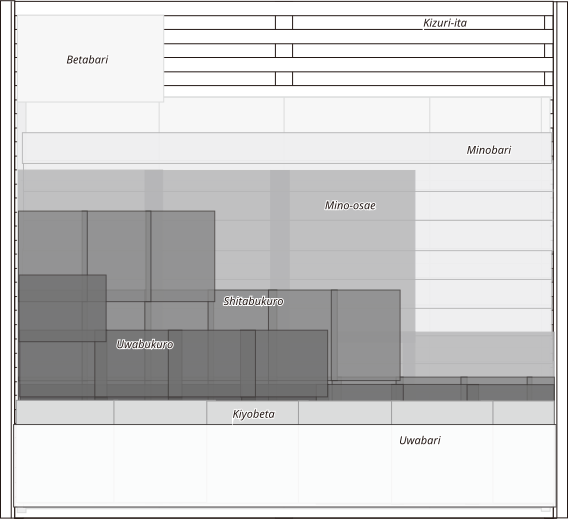
Traditional wallpapering involves layering base paper over substrates such as wooden laths (kizuri) nailed in parallel rows or latticework frames assembled from square timber. For the finishing top covering, natural materials such as washi paper or woven textiles with distinctive textures are used to create characteristic living spaces.
At every stage of the process, both the washi paper used and the application methods vary significantly, demanding a deep understanding of the materials' properties and high-level traditional techniques. This is why Edo-hyōgu kabeharitsuke is designated as a traditional craft.
In Japan's humid living environment, especially during the rainy season and summer, wallpapering techniques— which involve layering washi paper with high humidity-regulating properties—create a wall finish that is gentle on both the environment and its inhabitants.
Traditional Techniques or Methods
- For kabeharitsuke, the following techniques or methods shall be used:
- The base pasting shall be performed using the "mawaribeta/sōbeta," "fukurobari," and "kiyobari" methods.
- The finishing pasting shall be performed using the "uwabari (top covering)" method.
(Source: The notification of designation as Traditional Crafts by the Ministry of Economy, Trade and Industry)
